
"private sector"
200 article(s) found

From the origin of Peruvian coffee to the characteristics of Peruvian coffee to the Peruvian coffee market
Peruvian coffee market: the private Peruvian Coffee exporters Association (ComeradeExportadoresdeCafedelPeru) has been established, which is committed to improving the quality of coffee, and its primary task is to set standards and eliminate inferior products, thus creating an atmosphere of quality supremacy. This positive move heralds a bright future for the coffee industry. After that, as prices rose, farmers were also encouraged.

Is Nicaraguan coffee bean sour? damage to Nicaraguan coffee bean leaf rust
Professional coffee knowledge exchange more coffee bean information please follow the coffee workshop (Wechat official account cafe_style) front street-Nicaraguan coffee introduction Nicaragua is located in the central Central American region, the north boundary of Honduras, south of Costa Rica, east of the Caribbean Sea, west of the Pacific Ocean, with a total area of 130400 square kilometers. The highlands in the north-central part of Nicaragua and the coastal plains in the east

A brief introduction to the treatment method of grinding degree and baking degree of fine sour Guatemalan coffee beans
Coffee was really introduced into Guatemala in 1750 by Father Jesuit, and the coffee industry was developed by German colonists at the end of the 19th century. Today, most of the coffee industry's production takes place in the south of the country. There are seven major coffee producing areas in Guatemala, and the flavor of the coffee produced in each area is different, but to sum up, the coffee in Guatemala is all

The cultivation of boutique coffee beans in Agua Durse, Guatemala, geographical location, climate sea.
Every 30 years or so, the area near Antigua is hit by a volcanic eruption, which provides more nitrogen to the already fertile land, and sufficient rainfall and sunlight make the place more suitable for growing coffee. Its coffee belt is distributed over 1500 meters, between 14 and 16 degrees north latitude, and it is easy to grow very hard beans, all of which are washed.
Tanzania Coffee Annual report 2017
According to the forecast of FAS/ Dar es Salaam, the coffee production in Tanzania will increase from 1.05 million bags last year to 1.15 million bags in 2017 and 2018, mainly due to the biennial production cycle. Inventory is expected to decrease by 32000 bags compared with the previous year. The Tanzanian government (GOT) will continue to implement its coffee strategic plan to reach production by 2021
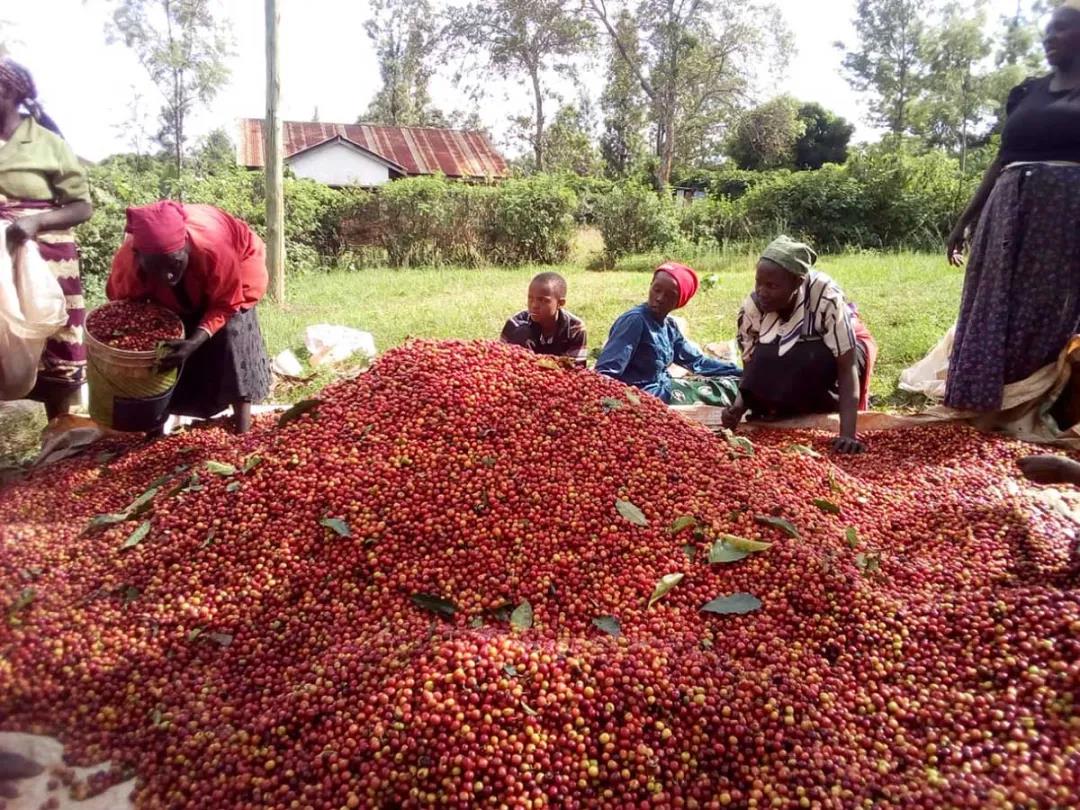
The quality of coffee production in Kenya is low? The government plans to revitalize coffee growers through coffee futures
Professional coffee knowledge exchange more coffee bean information Please pay attention to the impact of climate change in coffee workshops (Wechat official account cafe_style) and the serious governance strategies of coffee cooperatives in Kenya are affecting the performance of the coffee industry in Kenya, and COVID-19 is undermining the performance of the country's coffee export market. According to the data of the United States Department of Agriculture (USDA), since coffee is mainly used in 2020,

International Coffee Organization contributes Coffee flavor Coffee Culture in Coffee extraction areas
Contribution Coffee International has made a special contribution to the world coffee industry through: (1) regular high-level meetings for government representatives to exchange views, coordinate policies and cooperate on coffee issues. (II) launch a coffee development project aimed at improving product quality and marketing tools and eliminating pests and diseases (to date, the total investment of the project has reached US $31 million, co-financed by commodities.

"Hougu Coffee faces debt crisis" tracks two banks to untie Hougu Coffee loans.
Yesterday was Valentine's Day, and Hougu Coffee received the best gift: after paying attention to Hougu Coffee's call to confront the debt crisis, some banks approved the policy of providing short-term liquidity loans to Hougu Coffee and supported loosening the term of Hougu Coffee loan. On the 10th, this newspaper reported that "mired in the swamp of private loans to turn around funds, Hougu Coffee revealed that it was facing a debt crisis.

International Coffee Organization-2
The 1983 International Coffee Convention has the following main economic characteristics: 1. When necessary, adopt an export quota system to ensure price stability within a certain range. This scope is reached annually through consultation between members of the organization's coffee importers and exporters at meetings of the International Coffee Council. two。 When the price of coffee rises above a certain level, the quota system will be terminated;

A brief introduction to the flavor and aroma characteristics of Nicaragua Lakadura coffee beans with strong aroma
The coffee industry, run by the Mayans, once boomed Guatemala's economy and dominated the national economy. Unfortunately, the political situation in Guatemala is not good for these coffee growers. High output is usually a sign of a country's overall economic prosperity. However, coffee production in Guatemala has declined relatively, at only 700 kilograms per hectare.

A brief introduction to the flavor and aroma characteristics of Niagara Lakadura boutique coffee beans
Guatemala is located in the center of North and South America, and its geographical location occupies an important position in Central America. Guatemala covers an area of about 108899 square kilometers. The land features can be divided into plateau volcanoes, lowland tropical forests, volcanic sandy shore plains along the Pacific coast, and virgin lands along the Caribbean Sea. The SierraMadre Mountains of Central America span east and west of Guatemala, covering an area of

Characteristics of coffee producing area in Burundi introduction of boutique coffee beans in Burundi
Characteristics of Burundi Coffee: Burundi (Burundian) has the most diverse and successful coffee industry in the world, and has its own characteristics. Burundian coffee is fragrant and has excellent acidity. Flavor: mellow taste, rich aroma, excellent acidity recommended roasting method: medium to deep roasted Burundian (Burundi) coffee was roasted by Belgian colonists in 1930

Introduction of Guatemalan Coffee beans
Coffee production in Guatemala has declined relatively, at 700kg per hectare, while that in El Salvador is 900kg per hectare and that in Costa Rica is even more astonishing, at 1700 kg per hectare. Guatemalan coffee exports are controlled by private companies, but the National Coffee Council (AsociacionNacionaldeCafe) controls other ministries of the coffee industry.

The Origin of Guatemalan Coffee beans
Coffee production in Guatemala has declined relatively, at 700kg per hectare, while that in El Salvador is 900kg per hectare and that in Costa Rica is even more astonishing, at 1700 kg per hectare. Guatemalan coffee exports are controlled by private companies, but the National Coffee Council (AsociacionNacionaldeCafe) controls other ministries of the coffee industry.

What are the most famous coffee plantations?
Costa Rica's crop is even more impressive, reaching 1700 kilograms per hectare. Guatemala's coffee export trade is controlled by private companies, but the National Coffee Council (Asociación Nacional de Cafe) controls the rest of the coffee industry. Some of Guatemala's finest coffee is exported to Japan, where it sells for $3 to $4 a cup. most of the

Characteristics of Coffee Origin in Guatemala
Coffee production in Guatemala has declined relatively, at 700kg per hectare, while that in El Salvador is 900kg per hectare and that in Costa Rica is even more astonishing, at 1700 kg per hectare. The export of dangerous Dimara coffee is controlled by private companies, but the National Coffee Council (Asociacion Nacional de Cafe) controls the coffee industry.

Introduction of boutique Guatemalan coffee beans
Coffee production in Guatemala has declined relatively, at 700kg per hectare, while that in El Salvador is 900kg per hectare and that in Costa Rica is even more astonishing, at 1700 kg per hectare. The export of dangerous Dimara coffee is controlled by private companies, but the National Coffee Council (Asociacion Nacional de Cafe) controls the coffee industry.

The Origin of Guatemalan Coffee beans
Coffee production in Guatemala has declined relatively, at 700kg per hectare, while that in El Salvador is 900kg per hectare and that in Costa Rica is even more astonishing, at 1700 kg per hectare. The export of dangerous Dimara coffee is controlled by private companies, but the National Coffee Council (Asociacion Nacional de Cafe) controls the coffee industry.

Flavor Origin of Guatemalan Coffee beans
Coffee production in Guatemala has declined relatively, at 700kg per hectare, while that in El Salvador is 900kg per hectare and that in Costa Rica is even more astonishing, at 1700 kg per hectare. The export of dangerous Dimara coffee is controlled by private companies, but the National Coffee Council (Asociacion Nacional de Cafe) controls the coffee industry.

Treatment methods of Guatemalan coffee beans
Coffee production in Guatemala has declined relatively, at 700kg per hectare, while that in El Salvador is 900kg per hectare and that in Costa Rica is even more astonishing, at 1700 kg per hectare. The export of dangerous Dimara coffee is controlled by private companies, but the National Coffee Council (Asociacion Nacional de Cafe) controls the coffee industry.